Health Tech Wasn't Built With You in Mind. You Can Help Change That.
You download the app your clinic recommended. You open it, and within a minute you can feel that it was not made for someone like you. The questions assume a life you do not lead. The language is not your first. The system it expects you to slot into is not the one you are actually trying to navigate.
If you live with a long-term health condition, and you are doing it as an international in an unfamiliar Belgian system, that feeling is not in your head. The tools probably were not built for you. And mathematically speaking, they probably weren't.
The data was never neutral
Much of the medical research and digital technology we rely on today was built using data from narrow, fairly similar groups of people. That has a cost. It means the tools often miss the real, everyday experience of patients who do not fit the original sample.
It misses the language barriers. The low-grade stress of navigating a foreign healthcare system. The challenge of balancing shift work with chronic pain. The cultural differences in how people even talk about being unwell. None of that was in the spreadsheet, so none of it shaped the design.
Your experience is missing data, not a missing point
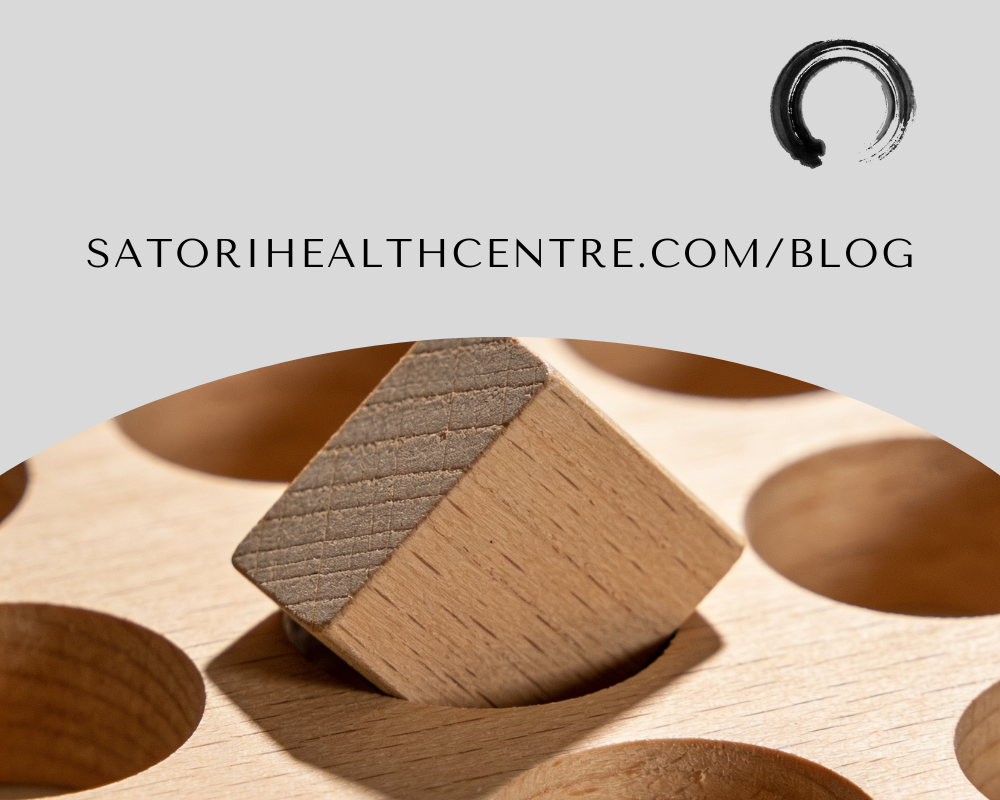
This is why healthcare innovation needs your voice. Real medical progress should not ask you to squeeze into a rigid, outdated mould. The care pathways and tools of the next decade need to be built with the people who actually use them, not just for them.
Good health technology should fit the patient. It should not ask the patient to fit it.
That shift, from designing for people to designing with them, is sometimes called co-design. It sounds technical. In practice it just means patients in the room early, while decisions are still being made.
Three ways to add your voice
You do not need a medical background to take part. You need lived experience, which you already have. A few practical routes:
- Get involved in co-design. Watch for health apps or clinic programmes asking for user testers. Your feedback as an international patient can stop a flawed, biased tool before it ships.
- Join a patient organisation. Advocacy groups are the strongest bridge between patients and the medical world. Joining adds your weight to a collective voice developers and policymakers cannot easily ignore.
- Take part in inclusive research. When local trials or survey pilots open up, consider joining. When diverse backgrounds are represented, the underlying science gets safer and more accurate for everyone.
Agency is part of the work
In health psychology, the work is not only about coping with a condition. It is also about finding your agency within it. Choosing where you have a say, even when so much of illness feels out of your hands.
Helping to shape how healthcare gets built is one of those choices. It is a way of turning a frustrating experience into something that makes the system a little fairer for the person who comes after you.
Where to start in Belgium
A few organisations worth knowing, depending on your language and your condition:
Vlaams Patiëntenplatform (VPP). The Flemish Patients' Platform coordinates over 120 patient organisations, working on equitable rights, digital accessibility, and policy representation across Flanders. vlaamspatientenplatform.be
Ligue des Usagers des Services de Santé (LUSS). The French-speaking counterpart, supporting patient networks, reinforcing patient rights, and raising user experiences in care. luss.be
Pain Alliance Europe (PAE). A European umbrella body connecting chronic pain patients directly with researchers and developers, using patient-led data to improve quality of life. pae-eu.eu
If you want to read more on co-design from a health-tech angle, there is a longer piece on inherited bias in mobile health here: the role of inherited bias in mHealth.
Ready to do the work?
Living with a long-term condition in a country that is not your own asks a lot of you. Part of the support I offer is helping people find the parts of that experience they can still steer.
If any of this resonates, I work with people managing chronic illness and health anxiety at our Leuven practice and online, including many internationals navigating the Belgian system for the first time. A first session is simply a conversation, a chance to talk through what you are carrying and see whether we are a good fit. You can book a first session here, or read my profile to get a sense of how I work.